Category: Bookkeeping

  • Double-Entry Bookkeeping Explained: Meaning, Rules & Examples

    what is double-entry accounting?

    As all unmatched entries impact two accounts, discrepancies are easy to detect. But with a little practice, you’ll be a pro at the double-entry accounting system in no time. A debit is an entry made on the left side of an account while a credit is an entry on the right side. When you send the invoice of $2,500, your receivables increase (debit), and your revenues increase (credit) by $2,500. The PW Skills Certification Program in Finance, Tax, and Accounting (CPFTA) is a 4-month online course developed in collaboration with PwC India.

    Which System Should Businesses Use?

    However, with vigilance and standard practices, one can avoid these pitfalls. In essence, double-entry bookkeeping is a rigorous framework for maintaining financial records that ensure every transaction is captured symmetrically across multiple accounts. You would need to enter a $1,000 debit to increase your income statement what is double-entry accounting? “Technology” expense account and a $1,000 credit to decrease your balance sheet “Cash” account. The trial balance labels all of the accounts that have a normal debit balance and those with a normal credit balance. The total of the trial balance should always be zero, and the total debits should be exactly equal to the total credits. At least one account will have an amount entered as a debit and at least one account will have an amount entered as a credit.

    B. Risk of Errors Despite Controls

    • Similarly, when a company borrows money from a bank, the cash account is debited (increased) and the notes payable account is credited (increased).
    • The total debits ($1,000) must always equal the total credits ($1,000), ensuring the accounting system is accurate and error-free.
    • Double-entry accounting records every transaction with two parts—debit and credit—to keep financial statements accurate and balanced.
    • This method of bookkeeping allows for much more detailed financial statements.
    • This equation reflects that what a business owns (assets) must be funded by what it owes (liabilities) plus the owner’s investment (equity).
    • Double entry also requires that one account be debited and the other account be credited.

    “Double entry book-keeping is a system by which every debit entry is balanced by an equal credit entry. As a result, the total amount of debit is always equal to the total amount of credit, regardless of the time of year. The key feature of this system is that the debits and credits should always match for error-free transactions. The idea behind the double entry system is that every business transaction affects multiple parts of the business. For example, when a company receives a loan from a bank, cash is received and an obligation is owed. Tools such as QuickBooks, Xero, and Zoho Books help you automate debit and credit processes, reduce errors, and generate reports instantly.

    Mastering the Bottom Line: A Comprehensive Guide to the Definition of Financial Acumen

    what is double-entry accounting?

    A chart of accounts (COA) is an index of all the different accounts within a company’s ledger. ACID stands for Atomicity, Consistency, Isolation, and Durability—the four rules that keep database transactions running smoothly. Together, they ensure every transaction is reliable, predictable, accurate, and intact. Double-entry bookkeeping is essential across all sectors and industries, providing the foundation for financial management, reporting, and strategic planning.
    what is double-entry accounting?

    Modern bookkeeping tools like QuickBooks Online make double-entry bookkeeping easier and more accessible. QuickBooks Online automates the tracking of debits and credits, ensuring accuracy while saving you time. Bookkeeping is an important activity for maintaining accurate financial records. Bookkeeping can help you prepare a budget, check for tax compliance, evaluate your business performance https://www.bookstime.com/ and help you with decision-making. We bet you have thought about getting all of these operations in place for your business.

    Compare the best bookkeeping software for small businesses

    When you total up both columns, debits on one side and credits on the other, they should be equal. The general ledger reflects a two-column journal entry accounting system. When using double-entry accounting, you’ll use several types of accounts, which you’re probably already familiar with. They’re the primary accounts on your balance sheet and income statements.

    what is double-entry accounting?

    Understanding Transactions and Accounts

    • If a business buys raw materials by paying cash, it will lead to an increase in inventory (asset) while reducing cash capital (another asset).
    • Unlike single-entry bookkeeping, which focuses on tracking cash flow, double-entry accounting provides a full view of a business’s financial health.
    • Accounting software might record the effect on one account automatically and only require information on the other account.
    • With accounting software, businesses can easily record transactions and generate financial statements.
    • In a double-entry system, every transaction will have an equal amount of debit and credit.
    • But with a little practice, you’ll be a pro at the double-entry accounting system in no time.

    Using GAAP and double-entry provides a standardized method for financial reporting, which helps investors compare the financial health of different companies. As noted above, every transaction has a dual effect on your business, and to keep the books balanced, the total amount debited must equal the total amount credited. It can take some time to wrap trial balance your head around debits, credits, and how each kind of business transaction affects each account and financial statement. To make things a bit easier, here’s a cheat sheet for how debits and credits work under the double-entry bookkeeping system. By its very nature, double-entry accounting is an accounting system that encourages – in fact, demands – high levels of accuracy. Businesses can better track income and expenses with every transaction being recorded in at least two accounts.

    It is used by businesses of all sizes, from small startups to large corporations. The double-entry bookkeeping system has been used in Europe since the 13th century and is considered one of the foundations of modern capitalism. Choose an accounting software solution or set up a physical accounting ledger that supports double-entry bookkeeping.


  • Statement of Retained Earnings: How to Gain Insight into Invested Profit

    what goes on statement of retained earnings

    Let’s dive into the world of retained earnings a number that reveals the effect of your profitability and cash reinvestment over time. Next, add the net income for the period to petty cash the beginning retained earnings. If the company incurred a net loss, subtract the net loss from the beginning retained earnings. The numbers provide insight into a company’s financial position and the owner’s attitude toward reinvesting in and growing their business. Let’s say your business has beginning retained earnings of $10,000 and net income of $4,000.

    How to Use a Statement of Retained Earnings to Drive Business Growth

    what goes on statement of retained earnings

    For private companies, this might include owner draws that reduce company profits. The statement of retained earnings equation might also include adjustments for accounting changes, prior period corrections, or stock repurchases. These items ensure the statement accurately reflects all factors affecting retained earnings beyond regular operations. Retained earnings reflect the cumulative amount of net income a company has retained over time, after distributing dividends.

    • Let’s break it down into a formula that makes sense for small businesses, especially those with a single owner where dividends are more aptly considered as Owner’s Draws.
    • They are a measure of a company’s financial health, and they can promote stability and growth.
    • Double Entry Bookkeeping is here to provide you with free online information to help you learn and understand bookkeeping and introductory accounting.
    • Net income from the income statement flows into the retained earnings section, increasing equity, while dividends declared reduce it.
    • But bear in mind, this isn’t a compulsory tradition; some companies choose to reinvest profits back into the business instead.

    Retained earnings formula

    • The calculation of retained earnings involves taking the retained earnings from the beginning of the period, adding it to the net income (or loss), and then subtracting dividend distributions.
    • The statement of retained earnings plays a crucial role in accounting, detailing the changes in accumulated profits over a specific period.
    • Retained earnings are at the heart of strategic financial planning for any business.
    • The formula helps you determine your retained earnings balance at the end of each business financial reporting period.
    • Dividend payments reduce retained earnings because they represent a distribution of profits to shareholders, thus decreasing the amount of accumulated profits retained in the company.
    • In essence, the statement is nothing more than a reconciliation or “bird’s-eye view” of the bridge between the retained earnings amounts appearing on two successive balance sheets.

    Investors look at the current year’s and previous year’s retained earnings balance to predict future dividend payments and growth in the company’s share price. The statement may include adjustments for prior period errors or changes in accounting policies. These adjustments ensure that the retained earnings reflect the most accurate and fair view of the company’s financial position. By accounting for these changes, the statement provides a transparent view of how accumulated profits have evolved over time.

    • Dividends Paid reduce the retained earnings as they represent the distribution of profits to shareholders.
    • On the other hand, it could be indicative of a company that should consider paying more dividends to its shareholders.
    • A company with consistently mounting retained earnings signals that it’s profitable and reinvesting in the business.
    • Net income is the company’s profit for an accounting period, calculated by subtracting operating expenses from sales revenue.
    • A company maintaining positive retained earnings through various business cycles demonstrates resilience.
    • Companies that are nearing maturity sometimes have a surplus of cash on hand and may prefer to distribute it to shareholders rather than invest it in high-return ventures.

    Subscribe to our newsletter and stay informed on the latest SaaS insights

    what goes on statement of retained earnings

    Net income is found on your company’s profit and loss statement (also called an income statement). You’ll refer to the balance sheet to find cash dividends and stock dividends on your balance sheet. Net income is like the heartbeat of your company’s financial health, pulsating through the veins of your statement of retained earnings. Think of it as the hard-earned result of HVAC Bookkeeping your business operations—the grand total after expenses bow out of revenues’ spotlight. Retained earnings represent a useful link between the income statement and the balance sheet, as they are recorded under shareholders’ equity, which connects the two statements. This reinvestment into the company aims to achieve even more earnings in the future.

    what goes on statement of retained earnings

    Send Me Accounting for Everyone Weekly Updates

    Retained earnings are the portion of a company’s net income that management retains for internal operations instead of paying it to shareholders retained earnings statement in the form of dividends. In short, retained earnings are the cumulative total of earnings that have yet to be paid to shareholders. Sood says many business owners pride themselves on their profitability or sales growth, but still have poor or negative retained earnings because they have withdrawn significant profits as dividends. Doing so can hinder the company’s ability to obtain financing or outside investment. The statement of retained earnings is a financial statement entirely devoted to calculating your retained earnings. Like the retained earnings formula, the statement of retained earnings lists beginning retained earnings, net income or loss, dividends paid, and the final retained earnings.

    • Following our example, Widget Inc. begins their fiscal year with retained earnings of $15,000.
    • Alternatively, the company paying large dividends that exceed the other figures can also lead to the retained earnings going negative.
    • Conversely, cash on hand is the literal liquid assets—currency, bank account balances, easily accessible funds—that a company can quickly mobilize for immediate needs, emergencies, or opportunities.
    • The statement of retained earnings plays a vital role in understanding the overall financial picture of a company, complementing other financial reports such as the income statement and balance sheet.
    • The statement of retained earnings provides insights into how a company reinvests its profits back into the business or distributes them to shareholders as dividends.

    what goes on statement of retained earnings

    The statement of retained earnings is also known as the retained earnings statement, the statement of shareholders’ equity, the statement of owners’ equity, and the equity statement. Investors use this statement to gauge how a company is managing its profits and to assess its potential for future growth and dividend payments. These adjustments correct prior period errors and reflect changes in accounting policies, ensuring the accuracy and consistency of financial statements. They earn $50,000 in net income and decide to reinvest $30,000 into new materials and expansion, while still paying $20,000 in dividends.

    what goes on statement of retained earnings

    Balance Sheet: A No-BS Guide to Accounts, Examples, and the Magic Equation

    It’s normal for the number to fluctuate from year to year, since a company’s growth rate or other conditions can change. The retention ratio, also called the plowback ratio, is the portion of net income that the business keeps after dividends. Patriot’s small business accounting software can help you accurately track income, expenses, and retained earnings.

  • Services on Account

    Suppose for example, a business provides web design services on account for the amount of 2,500, then the bookkeeping journal entry will be as follows. The invoicing of services on account means that an amount of money will be owed by the customer to the business, and this is referred to as a trade accounts receivable or trade debtor. The revenue from the services provided needs to be recognized in the accounting records even though the payment has not been received yet. As it is the service provided on credit, company has to record accounts receivable on the balance sheet. The journal entry is debiting cash received and credit sales revenue.AccountDebitCreditCash000Service Revenue000 Overall, the recording of service revenue on the income statement is invaluable for providing interested stakeholders with financial insights related to the performance of a business.

    • When the company provides service to the customer, they need to record the sale revenue on the income statement.
    • There are different types of accrued income, such as interest income, rent income, and commission income.
    • As a business owner, you likely already understand the importance of content marketing.
    • Service revenue differs from product revenue in that it does not involve the physical sale of goods.
    • This entry shows that your cash has increased and you’ve earned revenue.

    Journal Entries

    When recording accrued income, it is crucial to ensure that the income recorded is accurate and does not include any estimates or assumptions. Failing to record this liability account can result in overstated income and understated liabilities, leading to incorrect financial statements. The accrual period’s end is critical because it determines when the income should be recorded in the financial statements. One of the most common mistakes when recording accrued income journal entries is failing to recognize the accrual period’s end. By recording accrued income correctly, companies can provide insight into their liquidity, profitability, and cash flow. It is important for companies to record their accrued income correctly to ensure the accuracy of their financial statements.

    Step 3: Determine the amount increased or decreased for each account.

    While today’s business owners and accounting professionals record their transactions electronically rather than in books and journals, terms like “journal entry” and even “bookkeeping” reflect the profession’s paper-based past. Accrued income is usually recorded at the end of an accounting period, while accounts receivable is recorded when a sale is made on credit. Recording accrued income journal entry is a necessary step in maintaining accurate books of accounts for a business organization. The journal entry will credit the accrued income account for $10,000 and debit the revenue account for $10,000. In that case, the business can record the transaction by creating an accrued income journal entry. Debiting accounts receivable and crediting revenue is a common approach to recording sold services on account debit.

    This involves comparing the balance of the accrued income account to the source documents, such as invoices, contracts, or purchase orders. This involves calculating the amount of income that has been earned but not yet received. This is important because it allows for easy tracking of the income that has been earned but not yet received. If a business fails to recognize its accrued income, it may end up paying more in taxes than it should. Accrued income refers to the income that is earned but not yet received. It is important for accurate financial reporting and tax purposes, and it requires a bit of knowledge about accounting principles to understand it fully.

    This can be as simple as performing monthly bank reconciliations or having a second pair of eyes review high-value journal entries. Automated systems are especially powerful for applying complex standards like ASC 606 consistently across all transactions. This level of detail is crucial for transparency and accountability. This paper trail is your first line of defense in an audit and provides the necessary evidence to justify when and how you recognized revenue.

    This is important because it ensures that the financial statements of the business are accurate and reliable. This is important for businesses because it helps them to accurately calculate their profits, which is a key indicator of the financial health of the business. Accrued interest is interest that has been how to calculate days of inventory on hand earned but has not yet been received. This means that the goods or services have been provided, but the payment has not yet been made.

    The income statement provides an overview of a company’s financial performance, providing insight into its overall profitability. Company ABC has provided a service to the customer’s amount of $ 50,000 on credit. Instead, the customer pays for the service activities performed by the company. Service Revenue refers to the money that Register A Lei Number For Your Company a company earns from providing services, such as consulting, legal advice, data processing services, marketing, and so on.

    This isn’t a complicated transaction that needs to be analyzed in depth, but then again, its simplicity makes this analysis a good place to start.

    • Let’s return for one moment to the idea of unearned revenue.
    • Service Revenue represents amounts received from customers in exchange for provided services, and is distinguished from product sales or other activities that generate revenue.
    • We then recognize (record) one month of revenue once the service is performed to the customer’s satisfaction.
    • When it comes to accounting, there are several terms that can be confusing, especially for those who are just starting.
    • Beyond taxes, accurate revenue journal entries give investors, lenders, and your own leadership team a clear and honest look at your company’s performance.
    • Accrued income is recorded as revenue in the income statement, while accounts receivable is recorded as an asset in the balance sheet.

    Accrued vs. Unearned Revenue

    Revenue is a crucial metric in assessing a business’s financial health since it helps to measure how well it is doing in terms of generating profits and continuing operations. Revenue is the total amount of income generated by a company through its activities and operations. Nick has collected the cash but it’s not his—he hasn’t earned it. Let’s return for one moment to the idea of unearned revenue. If you were being audited, the independent reviewer would send “blind” confirmation letters to the customers asking what their records show they owe you. However, depending on the product and lender, accepting a funding offer may result in a hard credit inquiry, which could affect your personal credit score.2.

    In this case, the date of the journal entry would be the date of the invoice, July 1. In our example, you earned $1,000 in revenue, and your customer owes you $1,000. For example, let’s say you send a $1,000 invoice on July 1 for services your business completed for a client.

    This could be from a service or product that has been delivered but not yet invoiced, or a contract that has been completed but not yet billed. However, the customer does not pay until January of the following year. This is important for accurate financial reporting and for tax purposes. This can happen when a company has invested in bonds or other interest-bearing securities.

    Financial Accounting

    If a client pays you for a six-month software subscription upfront, you have the cash, but you haven’t earned it all yet. Unearned revenue (also called deferred revenue) is the exact opposite. While they sound similar, they represent opposite scenarios in your business’s financial story. Two terms that often cause confusion are accrued revenue and unearned revenue. For instance, if you’re halfway through a project at the end of the month, an adjusting entry would recognize 50% of the project’s revenue.

    It is a measure of the money that a business brings in from its activities which is the selling of goods or services. But at the end of the day, all businesses need to find ways to sell their goods or services in order to increase profit. Companies make money by selling goods or services to customers. Companies receive cash but recognize deferred Revenue so this creates a liability on their balance sheets until they deliver those promised goods or services later in time That means it goes unaccounted for until those services have been completed or delivered later down the line.

    A transaction price of $1,500 per cleaning is determined, with an agreement for $18,000 verbally, but each obligation under the contract is $1,500. You debit the purchase of a new computer by entering it on the left side of your asset account. You also increase your Accounts Receivable account with a debit, as seen in the same example.

    The journal entry is debiting accounts receivable and credit sale revenue.AccountDebitCreditAccounts ReceivableXXXSale RevenueXXX The journal entry is debiting cash $ 5,000 and credit service revenue $ 5,000. The first element is self-explanatory for most small businesses—it’s the date that the transaction being recorded by the journal entry took place. Accrued income is usually recorded when a business provides services to customers but has not yet invoiced them. Accrued income is an estimate of revenue that is expected to be received, while accounts receivable is the actual amount owed by customers.

    In this section, we’ll discuss accrued income in detail, and we’ll provide some examples to help illustrate the concept. Demonstrate journal entries for sales and payments on account Discover the ins and outs of 401k account securities accounts, including pros and cons, to make informed investment decisions. Debit increases in cash to record the receipt of cash. Collecting cash from customers is a crucial step in receiving payment.

    Accrued income is an important concept in accounting that is often misunderstood. You can also use this method to record cash received from other sources, like a loan or an investment. If you’re paid directly, you’ll have a clear record of the payments you’ve received, making it easier to track your income and expenses. Debits are recorded on the left side of an account, making it easy to spot where they belong. This entry debits Accounts Receivable because the company expects to receive that amount from the customer in the future. Instead, it creates an account receivable, which reflects the amount that the customer owes the company.

    Understanding the basic journal entries for service revenue is the first step toward mastering your books. This principle, known as the accrual basis of accounting, is fundamental to understanding your company’s financial health. At its core, ASC 606 requires you to recognize revenue when you have earned it by transferring a promised good or service to a customer. It’s crucial to keep service revenue separate from product revenue and other income sources, like interest. Debit Cash is received from the customer for the provision of the services.

    Tracking service revenue isn’t just about seeing money come in; it’s about understanding the complete financial story of your business. As you deliver the service, you’ll make adjusting entries to move the money from the unearned revenue liability account to the service revenue account. As you deliver the service, you’ll gradually move the amount from the unearned revenue liability account to the revenue account on your income statement.

  • Equipment Depreciation Understanding the Impact on Appraisals

    Let’s consider a retail business that operates multiple stores and owns the buildings in which these stores are located. For example, let’s say a company purchases a delivery truck for $50,000, and it has an estimated useful life of 10 years. Calculating the overhead rate may be tricky because it is indirect.

    Implementing New Technology: Best Practices

    Accurate financial reporting and informed decision-making hinge on a clear understanding of when expenses are incurred. Tax loopholes for small businesses offer legal strategies to maximize profits and minimize tax liability. While you now have a solid foundation, the details of depreciation and how it affects taxes and financial statements can be important considerations. This process ensures compliance with accounting standards and provides a clearer picture of your business’s financial health. Yes, you can change the depreciation method for an asset after you’ve started using one, but it’s not a decision to be taken lightly.

    For instance, if a business owns real estate it rents out but doesn’t use in operations, the depreciation on that property wouldn’t be included in operating expenses. When a business acquires a long-term asset, it doesn’t expense the entire cost immediately. The exception is when depreciation relates to non-operating assets, such as idle equipment or investment property, where it’s classified separately.

    One of the most effective ways technology helps in reducing overhead costs is through automation and digitization. In this section, we will explore some examples, tips, and case studies that highlight the significant role of technology in reducing overhead costs. By prioritizing the upkeep of equipment, businesses can avoid costly breakdowns, extend equipment lifespan, improve efficiency, ensure safety, and enhance resale value. This means that businesses can avoid the expense of prematurely replacing equipment, saving them a substantial amount of money in the process.

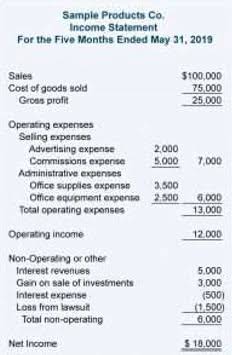
    That means it reduces your taxable income and the amount you’ll owe in taxes. Non-operating expenses aren’t tied to daily operations and can include items like interest expenses, lawsuit settlements, and inventory write-offs. These are typically recorded within SG&A (selling, general, and administrative) expenses.

    Double-Declining Balance Depreciation

    So, for the third year, the total office equipment expense related to the copier would be the annual depreciation ($1,000), plus the maintenance cost ($200), plus the software subscription cost ($300), totaling $1,500. The method of depreciation can vary (e.g., straight-line, double-declining balance), but the goal is to allocate a portion of the asset’s cost to each fiscal period over the asset’s useful life. As stated earlier, period costs are items used up outside the factory, and these costs primarily go into operating expenses on the income statement.

    It drives smarter repair vs. replace decisions

    To guarantee you maximize your tax deductions, it’s essential that you document the purchase details of your home office equipment accurately. Keeping accurate records of your home office equipment is essential for tax purposes. This method spreads the cost of an asset evenly over its useful life, making it easy for you to estimate annual deductions. Each method has its pros and cons, so evaluate your equipment’s usage, lifespan, and your financial situation to select the best fit.

    • Centralize your workflows, reduce downtime, and stay in control of every asset—anytime, anywhere.
    • Every business requires equipment to operate, which makes it essential to understand the concept of depreciation equipment for taxes.
    • The declining balance method calculates depreciation as a percentage of the asset’s book value at the beginning of each year.
    • It’s particularly useful for machinery, equipment, or vehicles where the level of activity directly impacts their depreciation.
    • For instance, if you buy office equipment for $15,000 with a useful life of five years, the straight-line method records $3,000 in depreciation expense each year.
    • That building goes into property, plant, and equipment on the balance sheet.

    To make accurate decisions, you also need to track how the asset performs in the field. ❌ Not always—for real-world asset health. SYD assigns more depreciation to early years using a weighted formula. There’s no one-size-fits-all approach to calculating depreciation. Depreciation isn’t just an operational concern—it’s a core accounting principle.

    Depreciation And Tax Planning

    • A transport company with old trucks may not be worth as much as a transport company with new trucks, for example.
    • Here we discuss how to calculate depreciation on equipment along with their examples and working.
    • For example, a printing press that costs $100,000 and can produce 1 million copies would have a depreciation cost of $0.10 per copy ($100,000 divided by 1 million).
    • Depreciation also provides a tax shield benefit by lowering your total taxable income.
    • On top of that, depreciation helps you with taxes as you can write it off as a company expense, which saves you money.
    • Tracking depreciation helps you anticipate when replacements will be needed, and what they’ll cost.
    • However, these assets also depreciate over time, impacting overhead costs.

    Every equipment which is bought is used over certain years, which leads to a decrease in its value. Contra accounts are used to track reductions in the valuation of an account accounting balance sheet without changing the balance in the original account. The cost of the labor required to deliver a service to a customer is also considered a product cost. Next year’s item value will be $1,800 cheaper, meaning that depreciation will amount to $1,440. The useful life varies by asset type. Some categories, like office furniture and appliances, fall under the seven-year category.

    The following are examples of depreciation on equipment. This method can also be referred to as the diminishing or reducing balance method. In this method, the same amount is deducted as depreciation.

    Understanding equipment depreciation isn’t just useful but essential for smarter financial planning, operational reliability, and long-term strategy. When it comes to depreciating home office equipment, avoiding common pitfalls can save you time and money. Then, choose a depreciation method, like straight-line or declining balance. Calculating depreciation for multiple assets can seem intimidating, but breaking it down into manageable steps makes the process much simpler.

    These allow you to deduct the cost of business assets more quickly, often benefiting your bottom line. Office supplies are typically expensed on your business income statement (P&L) and taken as a deduction on your business taxes in the year they are purchased3. Depreciation allows you to recover the cost of machinery and equipment over the time you use them, which can significantly reduce your tax liability. I’ll give an overview of the various categories where depreciation expenses come into play and discuss them later in the article. Depreciation is a crucial concept for businesses, as it allows you to allocate the cost of a tangible or physical asset over its useful life.

    For instance, you can claim for equipment depreciation on items like copiers, computer equipment, office furniture, manufacturing equipment, and tools. As a business owner, you can generally depreciate property used in your business or held for the production of income. While the straight-line depreciation method is the most commonly used, other methods may be more suitable depending on the situation. To calculate straight-line depreciation, you subtract the asset’s salvage value from the asset’s original cost and then divide the result by the asset’s useful life in years. Lastly, depreciation plays a role in evaluating the financial health of your business. First, it helps you accurately track expenses, leading to better financial planning and decision-making.

    Product (Manufacturing) vs. Period (Non-manufacturing) Costs

    Depreciation methods aren’t one-size-fits-all. This method applies a fixed percentage to the book value each year, resulting in higher depreciation upfront. Here’s a breakdown of the most common methods—and when they make sense to use. posting definition and meaning The method you choose can significantly affect your books, budgets, and asset strategies.

  • Updated 2023: Calculating R&D Tax Credit CA TX

    how to calculate the r&d tax credit

    There are two Base Amount calculations, one requires the taxpayer to have QREs and Gross Receipts in at least three of the years between 1984 and 1988. The other Base Amount calculation draws from a more recent period, tailored to a taxpayer’s founding year and financial record availability. For purposes of the payroll tax credit election, all members of the same controlled group are treated as a what is r&d tax credit single taxpayer. Thus, the aggregate gross receipts of all members of such a group must be taken into account in determining whether a business is a qualified small business. In addition, a member of such a group may not make a payroll tax credit election if the member (or any other member of the member’s group) has made a payroll tax credit election for 5 or more preceding tax years.

    how to calculate the r&d tax credit

    Example Of R&D Tax Credit Calculation Using The ASC Method –

    In Step Four, the company calculates its ASC by multiplying $80,000 by 14%, for a credit of $11,200. As a general rule, each company should analyze both the ASC method and the RRC method as applicable and use the approach that yields the highest credit. Reply STOP to opt-out; Reply HELP for support; Message and data rates apply; You may receive 1 message per week. The ASC is generally more favorable normal balance for startups and companies with inconsistent R&D activity or revenue fluctuations.

    how to calculate the r&d tax credit

    Can capitalized assets qualify for the R&D tax credit?

    • Click here to connect with one of our tax pros and see how much you can save.
    • This means you must evaluate alternatives through modeling, simulation, systematic trial and error, or other methods.
    • Any type of business is eligible to claim the R&D Credit, including corporations, LLCs, and sole proprietorships.
    • Some examples are payroll records for your R&D employees and expense accounts with receipts, blueprints, prototypes, and notes from project meetings.
    • Cinder Technologies partnered with Kruze Consulting to claim significant R&D tax credits, resulting in substantial savings for their growing startup.

    For example, if you owe some late PAYE or VAT, HMRC will apply the credit to that)​. When calculating the R&D tax credit, not all expenses related to research and development activities qualify. The key is to identify costs that directly support technological advancement as Accounts Payable Management required by IRS definitions. You can get a professional R&D tax credit expert to help calculate your cash benefit. They can also help you determine your R&D qualifying activities, prepare your claim, and present your innovations to HMRC.

    how to calculate the r&d tax credit

    Can Pennsylvania businesses claim both state and federal credits?

    The maximum amount of payroll tax research credit a small business can apply against payroll tax liability is $500,000. Cinder Technologies partnered with Kruze Consulting to claim significant R&D tax credits, resulting in substantial savings for their growing startup. Many VC-backed startups don’t realize they qualify for substantial R&D tax credits. IRS examinations of R&D credits are common, and inadequate documentation is the primary reason credits are reduced or disallowed. Contemporaneous documentation created during the research process is essential. The IRS expects documentation proving all four parts of the qualifying research test for each project and detailed support for all QRE amounts claimed.

    how to calculate the r&d tax credit

    What Do I Include With My Amended Return?

    Ensure you fill in the CT600L supplementary form correctly – this is where you declare the R&D credit, how much is payable, how much to offset, etc. It’s often useful to have a second pair of eyes (another accountant or an R&D tax specialist) review the completed forms and calculations before submission, especially under the new rules. Newer companies may prefer the simpler approach, while those with a strong history of R&D spending often benefit from using the regular method. The R&D tax credit experts at ETS would be happy to help you select the optimal approach based on your specific situation. In general, the RRC method may work well for taxpayers with low “base amounts” or for new startups.

    how to calculate the r&d tax credit

    • One important update is that SME restrictions on subsidised R&D have been removed.
    • Before sharing sensitive or personal information, make sure you’re on an official state website.
    • Download our R&D Tax Credit Calculator for Android to see how much you can receive from your qualified R&D tax credit expenses.
    • If you are claiming R&D credits—but you aren’t using the stages of your development process and related documentation to identify and support your credit—you might not be full capitalizing on your tax benefit.
    • However, new businesses that have a lot of research costs and little or no income tax liability have an alternative that can help them reduce their tax burden immediately.

    Get free guides, articles, tools and calculators to help you navigate the financial side of your business with ease. Businesses can qualify based on any combination of these expense categories, as applicable. Partner with us and watch your business thrive through strategic tax incentives. Most importantly, your eligibility isn’t determined by the success or failure of a project. Even if your venture hits a snag, you still get to claim that credit.

  • Bookkeeping for startups: how to set up and scale your finances

    accounting for startups books

    An accounting professional that’s on your side, available to answer questions and explain your financials, is invaluable in those negotiations. However, if you want to take a stab at your accounting, read accounting for startups on to see tech startup accounting tips that you can follow. We’ve included everything from why and how to budget, to free financial model templates, to record keeping, to taxes and more … We like to call it the ultimate guide to startup accounting.

    • If you are going to be acquired by a publicly-traded company for hundreds of millions or billions, GAAP will be important.
    • Starting with solid accounting practices ensures your startup is ready to face challenges, impress investors, and grow confidently.
    • However, we like QuickBooks for their easy-to-use suite of solutions for accounting and more.
    • If you want to get a more complete picture of the tools that interest you, read our full reviews or sign up for free trials to the ones that interest you.
    • This allows you to focus on growing your business while ensuring your financial records are in expert hands.

    Underestimating tax obligations

    The client has an obligation to pay the business for services rendered or goods sold. In short, invoices are an important part of how small businesses make money. If you’ve just started your own business, you might want to use an invoice template for keeping track. As you go forward and grow, Freshbooks has excellent invoice software that will allow you to automate and simplify the invoice process.

    What is the best accounting method for startups?

    • Startup owners may be tempted to cut corners by managing their accounting personally.
    • You’ll need to understand what each term means and what the differences are to ensure that you’re keeping proper financial records.
    • This type of accounting is more involved but will give you a clearer outlook of the business’s future picture.
    • While those aspects are key to your business’ success, so are your finances.
    • If your startup won’t deal with inventory and only needs a simple system for recording money flowing in and out, spreadsheets will do.

    It’s ideal for startups transitioning to more complex needs, like managing multi-entity setups, deferred revenue, or preparing for a fundraising round. Want a more comprehensive look at how to set up the accounting and finances for your startup? As an added benefit, handling your own financials will allow you to truly grasp how money flows in and out of your business. You’ll feel more confident about your financial standing and the many rapid-fire financial decisions a startup founder has to make. Staying on top of these records will save you headaches and set your business up for financial clarity and compliance.

    Do startups need accountants?

    accounting for startups books

    We recommend talking to an accountant or lawyer to discuss what business entity would be best for your organization. Pilot’s bookkeepers helped Ravi produce triple-checked, accurate financials. They were so effective, they caught unpaid invoices and errors from vendors. Business owner was personally pulling and analyzing every financial number, running bookkeeping and KPI analysis—becoming the bottleneck preventing growth focus. Introduced business advisory and tax planning services to better support our growing client base of entrepreneurs and small businesses. Remember, your bookkeeping system will feed into the work your accountant does.

    accounting for startups books

    Zoho Books

    • Open a dedicated business bank account and consider obtaining a business credit card to make transactions easier to manage.
    • This avoids fines and audits, which hurt a startup’s tight budget.
    • Pilot also handled all the compliance paperwork for multi-state hiring so Iba could focus.
    • Accounting is deciphering your financial records for everything from paying the right taxes to strategic business decision making.
    • Handling your company’s accounting is a very important duty and a full-time responsibility.
    • From pitching investors to managing product development, you’ve got a lot of things on your plate.

    Our team helps you stay compliant, investor-ready, and focused on growth—not data entry. This model offers flexibility, https://www.theclintoncourier.net/2025/12/19/main-advantages-of-accounting-services-for-startups/ control, and cost-efficiency, especially useful for startups in the growth stage that aren’t yet ready for a full in-house team. Account reconciliation means comparing your internal records to external statements, like bank or credit card statements, to catch discrepancies. This helps identify missing transactions, duplicated charges, or even fraud.

    Advanced accounting strategies for growth

    EBITDA is an acronym for Earnings before Interest, Taxes, Depreciation, and Amortization and it is essentially a metric of the best parts of your business’s income statement. Even unprofitable startups must file annual federal and state taxes every year. 2021 standard mileage deduction is $0.56 per mile that you can write off on your taxes. Wave Accounting is best suited for small service businesses, more like home cleaning businesses, window washing, etc.

    • Records of all transactions made through your business bank accounts, including deposits, withdrawals, and fees.
    • Remember, good accounting isn’t just about managing what has happened—it’s about using financial data to shape your startup’s future.
    • As CPAs, we have a deep knowledge of the unique needs of startup companies and we understand the latest AI and accounting automation tools.
    • There are many alternatives out there, but the best all-inclusive accounting software for your startup is Deskera.
    • They should be able to create reports and dashboards that clearly communicate your financial position and performance.

    Step 4 – Build your chart of accounts

    accounting for startups books

    Learn all the best practices of CRMs to simplify customer relationship management and elevate your bond with loyal customers. Grab a free copy of this comprehensive guide to developing your business from scratch. Create a system to save receipts, invoices, and financial documents.

    Zoho Books helps you record all your expenses and bills and see where you spend your money. Generate reports for bills and expenses, follow your spending patterns, identify your top vendors, and always stay updated on the money that goes out. The cost of an accountant depends on many factors like the size of the business or experience of the accountant. However, based on US Labor Statistics, for an in-house US accountant, you’ll be paying an annual average of $70,000.